
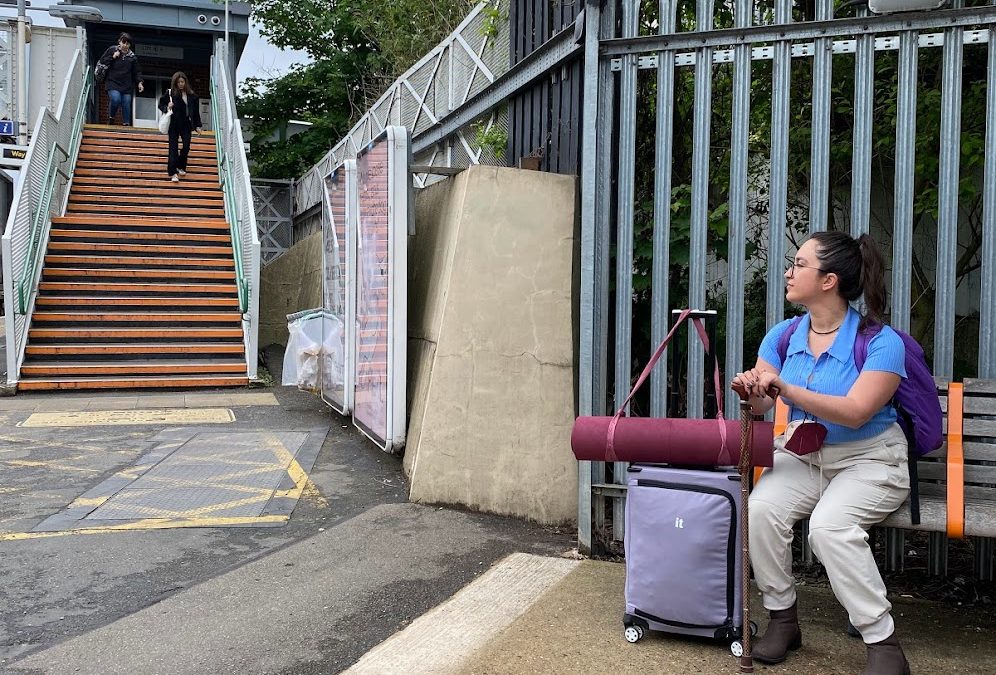
What nobody tells you about flying, fatigue, medication, and pacing
Yes. You can travel with MS. I’ve done it for 22 years, across four continents and more than a dozen countries, with foot drop, fatigue, and spasticity along for the ride. The question was never really whether it’s possible. It’s how you do it in a way your body can actually carry. That’s what this whole post is about.
I’m Monica Lynne, a journalist and a slow traveler, and I’ve had MS since 2004. I’m not going to tell you it’s easy, or feed you the line about pushing through if you just believe hard enough. I’m going to tell you what actually works, because the logistics are the part nobody explains. And the logistics are the whole game.
The Fear That Comes First
Almost everyone starts here: will traveling make my MS worse?
Travel itself doesn’t damage your nervous system. What travel does is invite in the things that spike symptoms… heat, exhaustion, stress, bad sleep, skipped rest. Those are real. They’re also manageable, once you know they’re the actual variables and not some mysterious force.
Heat is my biggest trigger, so I research a destination’s climate before I book a single thing. Fatigue is next, so I build rest into the bones of a trip instead of treating it like a parachute I’ll only pull if things go wrong. Manage the triggers, not the diagnosis, and travel stops feeling like a gamble.
Choosing Where to Go (Pretty Is Not the Point)
Most travel advice directs you to chase the most aesthetic place – and sure, that’s much of the draw of exploration. But to be comfortable beats chasing the beautiful every time. I research four things first, and beauty isn’t one of them.
Terrain. Flat or hilly? Cobblestone or paved? I peruse the neighborhoods in Google Street View before I commit to staying anywhere.
Temperature. I check the historical averages for that time of year, not just the ten-day forecast. If it runs hot, I plan around early mornings and shade, or I pick a different month entirely.
Healthcare. I find the nearest clinic and check whether my travel insurance covers an emergency. I’ve never needed it. I always look.
Rest infrastructure. Can I get food delivered? Is there a café within flat walking distance? Is the apartment up four flights with no elevator? A rest day only works if the place lets you rest.
Amsterdam passed all four, which is exactly why it became one of my favorite trips. That wasn’t luck. That was half an hour of research.
The Airport Is the Part That Used to Wreck Me
I used to burn all my energy just getting to the gate, then land with nothing left for the actual trip. Two things changed that completely, and both are free.
You can request wheelchair assistance through your airline even if you don’t use a wheelchair full time. Someone meets you at the door and gets you through security and to your seat, and you keep the energy you’d otherwise leave on the terminal floor. I use it every time. Without it, I arrive depleted before the trip has even started. With it, I land ready to actually enjoy where I am.
The second is TSA Cares. Call 72 hours before your flight, tell them you have a disability, and a passenger support specialist walks you through security. Free. Federally protected. Already exists. And almost nobody tells you about it.
The Medication Part
Keep your meds in your carry-on, never checked, in their original labeled packaging. Carry a doctor’s letter explaining your condition and prescriptions, especially for injectables or anything that needs to stay cold. If it has to stay refrigerated, a travel cooler gets it through security. Bring more than you think you need, because a delayed flight should never turn into a missed dose.
For long trips, the medication question gets bigger, and it’s worth solving before you leave. Switching to a twice-yearly infusion is the single thing that made months-long travel possible for me. It untethered my schedule from a monthly appointment. That’s a conversation between you and your neurologist, but it’s the right one to have early.
The other thing that makes long travel sustainable is keeping costs low. I work remotely, which means my income travels with me, and I keep accommodation cheap by house sitting: staying in someone’s home instead of a string of hotels. That means a real kitchen for my own food and medication routine, a quiet place to rest between big days, and a setup that actually supports a body that needs to slow down. It’s how I turn a two-week trip’s budget into a two-month one.
The Part I Wish Someone Had Told Me Sooner
A rest day is not a wasted day. It’s the reason the next four days are good ones.
I build rest into every trip before I leave. Not as a backup, as the actual frame the whole thing hangs on. Your autonomic nervous system, the part that runs your stress response, your inflammation, your energy, doesn’t care about your itinerary. It responds to what you actually give it. Give it nothing for long enough and it takes what it needs anyway, usually at the worst possible moment.
So I move slowly. One neighborhood instead of five. One anchor activity a day. A long lunch I’m not rushing through. The trips I remember most clearly are the ones where I did the least, and that’s not a coincidence. That’s a regulated nervous system doing exactly what it’s supposed to.
And when a flare lands mid-trip, or the fatigue comes in heavier than I planned for, the trip isn’t ruined. It just needs editing. One anchor activity, release the rest. The café instead of the museum when my legs are done. Edited isn’t ruined.
So, Can You Travel With MS?
You can. Not by ignoring your body, and not by waiting for some future symptom-free version of yourself who may never show up. You travel with MS by building the trip around the body you have, on the day you actually have it.
I’ve done it through wobbling foot drop, through fatigue that feels like wading through wet sand, through every stage of a progressing diagnosis. I’ve done it on four continents, and I plan to keep going, slowly, for a long time.
If you’ve been waiting for permission to start planning, this is it.
The Short & Sweet
You can travel with MS. The trick isn’t endurance, it’s design.
Manage the triggers, not the diagnosis: heat, exhaustion, stress, skipped rest. Research terrain, temperature, healthcare, and rest infrastructure before you book. Use the free help: airline wheelchair assistance and TSA Cares.
Keep meds in your carry-on with a doctor’s letter, and solve the long-trip medication question early. Build rest in first. A rest day is the reason the next four are good ones. When a flare hits, edit the trip. Don’t cancel it.
The goal was never the perfect itinerary. The goal was to go.
Have a travel trick that works for your body? Drop it in the comments: I’d love to add it to my routine too!
status quo → go 🧡
This post may contain affiliate links. I may earn a small commission at no extra cost to you, but I only recommend products I actually love, promise.