
I was lying in bed doomscrolling travel videos on YouTube, watching people zip through Lisbon and hike through Patagonia and eat their way through Tokyo, and I felt that specific kind of edge-of-your-seat longing that sits right between inspiration and defeat.
I wanted to do that. All of that, all over the world. I have always wanted that.
And then the other thought came in, the one that had been getting louder since my MS diagnosis: is that life even accessible to me anymore?
So I did what any self-respecting science nerd-journalist does when a question won’t leave her alone. I went looking for the answer.
What I found was a gap.
Wheelchair accessibility guides. Inspiration posts about overcoming. A lot of content designed for either full mobility or full accommodation needs, with almost nothing in between for the people living in the middle: chronic illness, dynamic disability, variable symptoms, good days and bad days and the constant negotiation between them.
Nothing that looked like me. Nothing that spoke to the version of travel I was actually trying to figure out. So I built it. Welcome.
Who I Am and Why That Matters Here
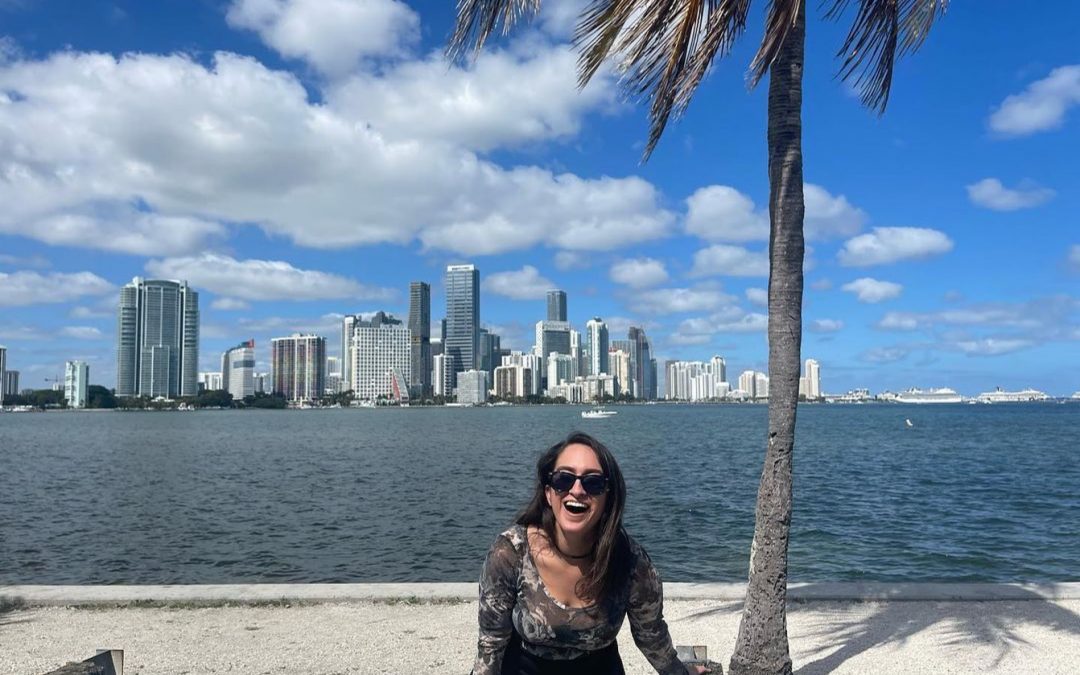
I’m Monica Lynne. I’m first-generation Cuban-American from Miami, bilingual, a medically reviewed journalist and science communicator, and a mixed mobility dancer. And now a traveling pet sitter. I also have multiple sclerosis (MS), which means my body operates on a variable schedule and my central nervous system does not always transmit signals the way it should.
Right now I am not using a wheelchair, but I am not fully unaffected. I am exactly in the middle, which is where most people with chronic illness actually live, and where most travel content has nothing to offer yet.
MS, for the uninitiated, is a chronic autoimmune condition where the immune system attacks the myelin sheath protecting the nerve fibers in the central nervous system, kind of like what happens when the plastic coating around your charger gets frayed and stops working reliably. What that means in practice is different for everyone. It’s called the snowflake because everyone’s symptoms are different.
For me, it means I experience fatigue that does not resolve the way typical tiredness does. It means heat sensitivity that turns the wrong climate into a real neurological problem. It means some days my legs are fully cooperative and other days not, and I have learned to plan around both possibilities without canceling my life.
That last part is the whole blog.
What “The Status Go” Means
The status quo means ‘the state of things’. How things are. The default.
When you have a chronic illness like MS, the status quo has a way of sneaking up on you. It is not one big decision. It is a slow drift toward less. A shrinking of the possible. A quiet accumulation of assumptions that certain things are not for you anymore, until one day you are lying in bed watching someone else’s travel videos and wondering how that happened.
The Status Go is the decision to move anyway.
To use your body for what it can do, and optimize around the rest. Not by ignoring your condition. Not by grinding through it. By building a travel practice designed for the body you actually have, with the real information that body needs, and the honest pacing that makes the whole thing sustainable.
For me that looks like slow itineraries and relaxed excursions. Long stays in one place instead of racing between destinations. Home bases instead of hotel check-in marathons. One real thing a day instead of ten things that leave me needing a full recovery week after I land back home. Research that goes beyond “is there an elevator” and into terrain, climate, neighborhood walkability, and what a recovery day actually looks like in this specific city.
That is not a workaround. That is just better travel.
The Gap Nobody Was Filling
When I went looking for resources, the landscape split into two camps.
On one side: full wheelchair accessibility guides, ADA compliance checklists, resources built around permanent and visible mobility needs. Genuinely useful, genuinely necessary, and not quite what I needed.
On the other: mainstream travel content that assumes you have unlimited energy, no symptoms, and a body that responds predictably to effort. Ten countries in two weeks. Wake up at 5am for the views. Walk thirty thousand steps and call it a great day.
In the middle, where dynamic disability lives, where chronic illness lives, where “it depends on the day” lives: almost nothing.
Nobody was writing for the traveler who can’t commit to the hike but still wants to see the view. The one who can white water raft on a Tuesday and needs a full rest day on Wednesday to recover. Nobody was writing for the person whose symptoms are invisible to everyone except herself. Nobody was writing for the mixed-mobility, variable-energy, good-day-bad-day reality that is the actual lived experience of millions of people who still want to see the world.
That is who I am writing for.
What You Will Find Here
Destination essays that tell you what it actually feels like to be somewhere, not just what to put on your itinerary. Neighborhood-level practical information: terrain, transit, climate, walkability, rest infrastructure, and honest assessments of what a slow travel stay in this place actually requires from your body.
Stories from Medellín and Amsterdam and Thailand and wherever I go next. Real information about what slow travel looks like when your body is part of the conversation instead of something you are quietly managing in the background.
And a perspective that mainstream travel content does not have: the science-literate, culturally specific, salsa-dancing, journalism-trained, Cuban-American-from-Miami point of view of someone who has spent years figuring out how to move through the world on her own terms, and is now writing it all down so you do not have to start from zero.
The Invitation
If you have ever looked at a travel video and felt that specific longing followed immediately by the question but can I actually do that, this blog is for you.
If you have ever felt like travel content was built for someone else’s body, someone else’s energy level, someone else’s version of a good day, you are right. Most of it was. And that is exactly why this exists.
You do not need a body that behaves predictably to move through the world. You need good information, honest planning, and someone who has already done the terrain research and is willing to tell you the truth about it.
The Status Go is not about waiting until you are well enough, rested enough, or certain enough. It is about building the practice now, with the body you have, and finding out what becomes possible when you stop letting the default version of travel set the terms.
I stopped waiting to be ready. I started moving slowly on purpose.
Let’s status GO 🧡
Subscribe below and I will send the next destination straight to you. No algorithm, no noise, just the next place I’m taking you.

 English
  Spanish
Hi, this is a comment. To get started with moderating, editing, and deleting comments, please visit the Comments screen in…